High cholesterol occurs when you have too much of a fatty substance (cholesterol) in your blood. But there are two types. LDL is known as the “bad” cholesterol because it forms fatty deposits and plaque in your artery walls. When high, this can block blood flow to the heart and brain. HDL is known as the “good” cholesterol because it helps to remove the “bad” LDL cholesterol from the body; this is specifically important when there is an excess. Having high cholesterol puts you at risk for heart disease.
High cholesterol can run in families, meaning if one of your parents had high cholesterol, there is a stronger chance you could as well. However, it is also influenced by lifestyle factors such as diet, lack of exercise, drinking alcohol, smoking, etc.
Because lifestyle factors have such a strong influence, there are things you can do to help lower your LDL “bad” cholesterol and increase your HDL “good” cholesterol.
If you’ve been told your cholesterol is high, try making some healthy lifestyle changes. Here are 5 things you can do to make a positive impact and support your heart health.
Eat More Foods Rich in Omega‑3 Fatty Acids and Monounsaturated Fats
Omega‑3 fatty acids don’t directly influence your LDL cholesterol, but they are an anti-inflammatory fatty acid that can reduce overall inflammation to support heart health. Fatty fish such as salmon, mackerel, and sardines are rich in omega‑3 fatty acids. Substituting meat or other animal-based proteins for fish can help reduce your saturated fatty acid intake, which can help reduce LDL levels.
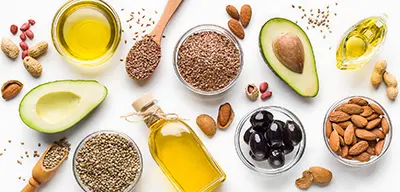
Regularly eating healthy fats (monounsaturated fats) like nuts, seeds, olive oil, and other Mediterranean-diet foods has been linked to a reduction in LDL levels and increases in HDL levels.[1] Nuts are rich in plant-based sterols, which keep the body from absorbing cholesterol and therefore work to reduce LDL levels. Bonus: Walnuts are also rich in omega‑3 fatty acids. Daily consumption of almonds and/or walnuts has been associated with reducing LDL cholesterol and maintaining or improving HDL cholesterol.[2]
 Getting These Is Easy:
- Prepack ¼ cup servings of almonds, walnuts, seeds, or olives
- Spoon out single-portion nut butters to enjoy with crackers
Eat More Fibre, Specifically Soluble Fibre
Soluble fibre is found in plant-based foods. It is not absorbed in the intestines, which makes it available to circulate in the intestine and reduce the absorption of cholesterol into the bloodstream.
Did You Know?
Eating just 5–10 grams of soluble fibre each day can reduce your total and LDL cholesterol by 5–10%.[3] You can find soluble fibre in oats, fruits, vegetables, legumes (dried beans and peas), and some nuts and seeds. You can also find soluble fibre in supplements such as psyllium husks.
 Move Your Body More
Exercise is good for almost everything; we are meant to move more and sit less. Research has shown that exercise can improve HDL cholesterol levels, decrease LDL cholesterol levels, and reduce triglycerides up to 25% depending on the study and the type of exercise (they contribute to your overall total cholesterol number).[4]
Where to start? Begin by adding in 10 minutes of movement to your daily routine and keep adding as your body allows you to. Build up to some form of moderate physical activity for at least 30 minutes, 4–5 times per week. This should be something that slightly elevates your heart rate; it could be a brisk walk, cycling, swimming, or playing a sport you enjoy. Finding a form of exercise you enjoy or a friend to exercise with can make all the difference.
Maintaining a Healthy Weight for You
A healthy weight will vary from person to person; however, maintaining a healthy weight for your body will help reduce your risk of developing high cholesterol and other heart health issues. For an overweight person, when losing 5–10% of their total body weight, there is a significant reduction in LDL cholesterol and triglycerides.[5] To put that into perspective, if someone weighs 300 lb, losing 15 pounds (5% of their body weight) can have a significant impact on their overall cholesterol levels. And the more weight this person looses, the greater is the improvement on all health risk factors.
2 for 1! Implementing some of the tips above—such as eating more healthy fats, focusing on fibre rich foods, and moving your body more—can also contribute to maintaining a healthy weight.
 Cook and Eat More Meals at Home
It is easy and enjoyable to eat out. However, food cooked outside of the home often includes much more sugar and salt, unhealthy fats, and processed ingredients and may come in larger portions, all of which contribute to increased cholesterol levels and negatively impact overall health. At home, you can reduce your intake of processed food, control your portions, and incorporate more healthy fat– and fibre-rich choices into your meals to support your heart health.
If you are eating out, do your best to choose restaurants that serve freshly made food that is minimally processed. My personal favourite take-out foods are burrito bowls from an authentic local Mexican restaurant. They are freshly made, and you can add lots of veggies, beans, and other healthy items.
Tips for Giving Your Meals a Heart-Health Boost:
- Use healthy oils (i.e., olive and avocado oil) instead or more often than margarine or butter
- Cook with whole grains (whole-wheat pastas, quinoa, barley, oats, etc.)
- Incorporate beans and other legumes into your meals
- Sprinkle nuts/seeds on your salads, yogurt, oatmeal, etc.
- Choose leaner meats more often; for example, make chili with ground turkey instead of beef
- Bake, roast, or air-fry your food; for example, potatoes are delicious baked in the oven with some oil or in the air fryer (without the actual frying)
- Replace fatty spreads or mayo with mashed avocado
I hope this has provided you with some ideas on how to reduce your cholesterol and support your heart health.
 Angela Wallace, MSc, RD
A registered dietitian with the College of Dietitians of Ontario, personal trainer, and family-food expert who specializes in women and child nutrition and fitness, she loves helping families get healthy together.
eatrightfeelright.ca
[1] Feingold, K.R. “The effect of diet on cardiovascular disease and lipid and lipoprotein levels.” In: Feingold, K.R., B. Anawalt, A. Boyce, et al., eds. Endotext [Internet]. 2000. https://www.endotext.org/
[2] Kalita, S., S. Khandelwal, J. Madan, H. Pandya, B. Sesikeran, and K. Krishnaswamy. “Almonds and cardiovascular health: A review.” Nutrients, Vol. 10, No. 4 (2018): 468.
[3] Surampudi, P., B. Enkhmaa, E. Anuurad, and L. Berglund. “Lipid lowering with soluble dietary fiber.” Current Atherosclerosis Reports, Vol. 18, No. 12 (2016): 75.
[4] Mann, S., C. Beedie, and A. Jimenez. “Differential effects of aerobic exercise, resistance training and combined exercise modalities on cholesterol and the lipid profile: Review, synthesis and recommendations.” Sports Medicine, Vol. 44, No. 2 (2014): 211–221.
[5] Brown, J.D., J. Buscemi, V. Milsom, R. Malcolm, and P.M. O’Neil. “Effects on cardiovascular risk factors of weight losses limited to 5–10%.” Translational Behavioral Medicine, Vol. 6, No. 3 (2016): 339–346.


 English