
 English
Kidney Stones: Small Crystals, Big Discomfort
Summer is finally here. Most of us are now spending long hours outside in the bright sun, feeling the warmth on our skin, firing up the BBQ, grilling juicy meat or poultry, and reaching for cold soda pops, beer, or punch to cool down after a hot, sweaty day. Next to the meat, a colourful spinach-and-beet salad may also land on the table with a sprinkle of salt, followed by a slice of strawberry-rhubarb pie. It sounds like the perfect summer meal—and, for most people, it is. But for those prone to kidney stones, a few of these seemingly harmless habits can quietly add up: more sweating, less water, more sodium, more animal protein, more sugar-sweetened drinks, and more high-oxalate foods. Together, they can create a urinary environment where minerals are more likely to concentrate, crystallize, and form stones.
Each year, around 0.3% of Canadian adults have a kidney-stone episode serious enough to appear in hospital, emergency, or procedure data, and about 4 in 10 of those recorded episodes require some type of intervention.[1] This does not include milder stones passed at home or managed outside hospital settings, meaning the true number of people forming stones may be higher.
What Are Kidney Stones?
Kidney stones are hard mineral deposits that form inside the kidneys when certain substances in urine become too concentrated and begin to crystallize. They may stay in the kidney without causing symptoms, or they may move into the ureter, where they can trigger severe pain, nausea, blood in the urine, or urinary blockage.
Most kidney stones are calcium-based, with calcium oxalate stones being the most common.[2] Other types include calcium phosphate, uric acid, struvite, and cystine stones. Each type has its own pattern, but many share the same basic starting point: urine that is too concentrated, too high in stone-forming compounds, or too low in natural protective factors.
Why Do Kidney Stones Form?
The body does not produce kidney stones on purpose: They form when the balance of urine chemistry shifts. Urine naturally contains minerals and waste compounds. When there is enough fluid, these substances stay diluted and are flushed out more easily. But when urine becomes concentrated, crystals can begin to form. Over time, these crystals can grow, clump together, and become stones.
This is where a typical summer day can play a role. Hot weather increases sweating, which means more fluid is lost through the skin. If that fluid is not replaced with enough water, urine becomes more concentrated.
Large-cohort research has also found that sugar-sweetened soda and punch were associated with a higher kidney-stone risk—by 23% and 18%, respectively—making water a much better everyday choice for urinary-tract wellness.[3]
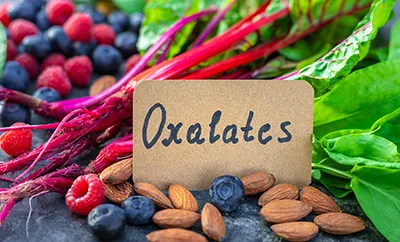
Diet can also influence stone-forming substances. Foods such as spinach, beets, rhubarb, Swiss chard, and almonds are high in oxalates.[4] These are nutritious foods, but in people prone to calcium-oxalate stones, very high oxalate intake may contribute to stone formation. Large amounts of animal protein—such as red meat, poultry, eggs, and seafood—can increase uric acid and may reduce citrate, a natural stone inhibitor in urine. Salt is another important factor: high sodium intake can cause the kidneys to release more calcium into the urine, which may increase the risk of calcium-based stones.[5] The Canadian Urological Association recommends that recurrent calcium-stone formers limit sodium to about 1,500 mg daily when possible and not exceed 2,300 mg per day.[6] That is roughly ⅔ to 1 teaspoon of table salt total from all foods, not just the salt shaker.
Other factors can also increase risk, including family history, higher body weight, type 2 diabetes, metabolic syndrome, inflammatory bowel disease, chronic diarrhea, gastric bypass, malabsorption, and certain medications.
Simple Ways to Tip the Scale in Your Favour
The first and most important step is hydration. Drinking enough water helps dilute the urine so minerals are less likely to bind together and form crystals. A practical sign is pale yellow urine throughout the day. People who sweat heavily, exercise outdoors, or spend time in hot weather may need more fluids than usual.
Citrate-rich drinks may also help. Lemon or lime added to water can provide citrate, a natural compound that helps keep certain minerals more soluble in urine.[7] This does not mean lemonade should be loaded with sugar, but adding citrus to water can be a simple, refreshing habit.
Protein balance matters, too. For those prone to stones, it may be helpful to moderate large portions of animal protein and include more plant-based protein options. Reducing sodium is another high-impact step.
Since most sodium comes from processed foods, restaurant meals, deli meats, canned soups, sauces, crackers, and packaged foods, choosing lower-sodium options can make a bigger difference than simply putting away the saltshaker.
Calcium is often misunderstood. Many people assume that calcium stones mean they should avoid calcium, but normal calcium intake from food can actually help bind oxalate in the digestive tract and reduce how much oxalate is absorbed. For someone prone to calcium-oxalate stones, pairing higher-oxalate foods with calcium-containing foods may help reduce oxalate absorption.
Where Chanca Piedra Fits In
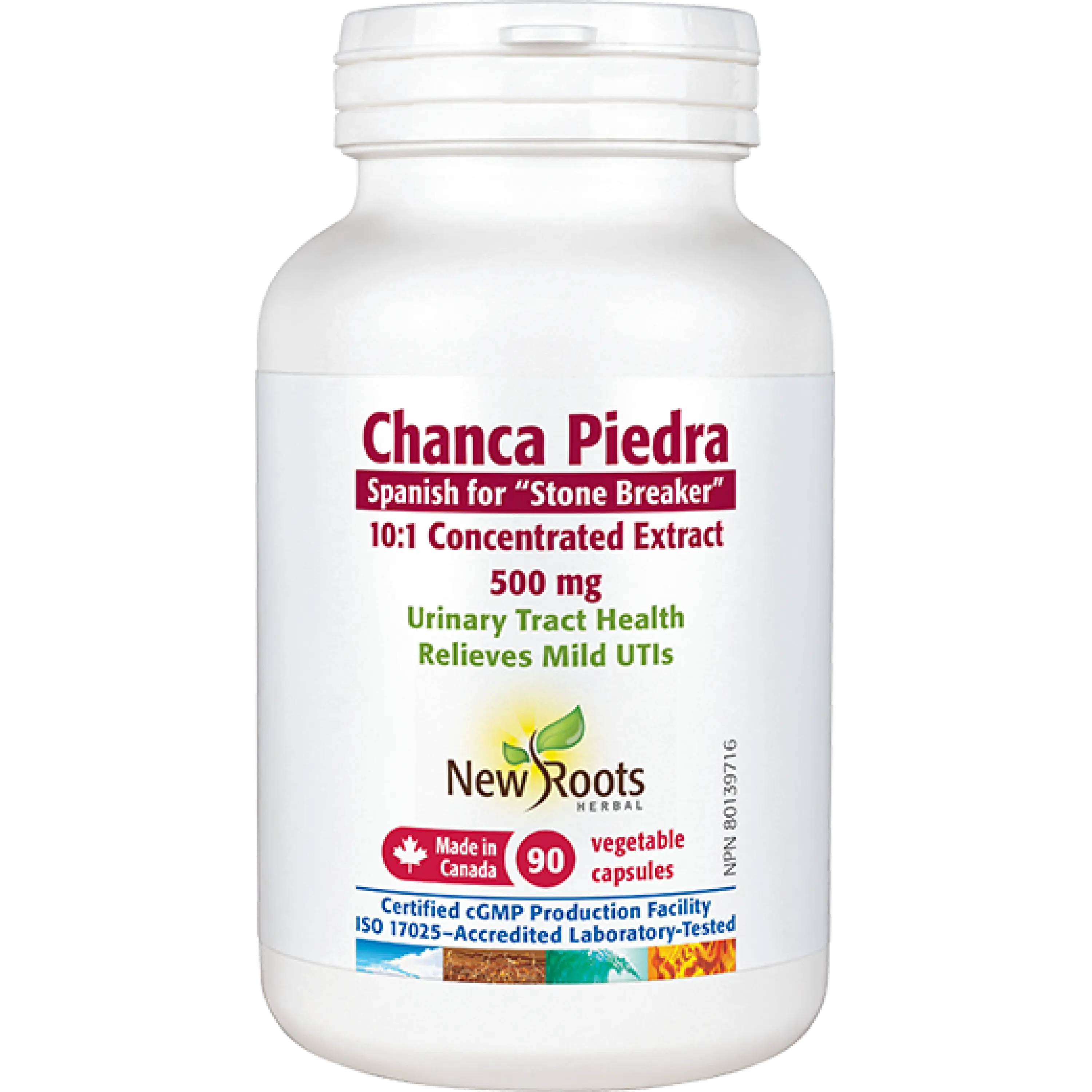
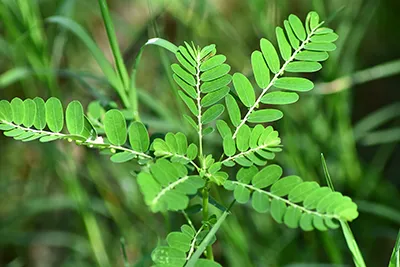
Chanca piedra, Spanish for “stone breaker,” is a botanical traditionally used for urinary-tract and kidney-stone support. Today, it is one of the best-known herbs in this category and is often featured in natural kidney stone–support formulas.
Modern research suggests that Phyllanthus niruri, the plant commonly referred to as chanca piedra, may influence several steps involved in stone formation. Proposed mechanisms include reducing calcium-oxalate crystallization, reducing crystal aggregation, modifying crystal structure and density, supporting urinary mineral balance, and promoting urinary flow through mild diuretic activity.
Human evidence is promising but still limited. A 2018 clinical study in 56 people with kidney stones under 10 mm found that 12 weeks of Phyllanthus niruri supplementation was associated with reductions in urinary oxalate and uric acid in certain participants, along with improvements in stone parameters.[8]
A 2020 systematic review and meta-analysis found that P. niruri was associated with reductions in average stone size and number of stones compared with placebo or no treatment, but only two studies met the inclusion criteria, meaning the evidence base remains small.[9] A more recent (2025) review also described P. niruri as a promising supportive botanical in urinary stone management, particularly as an adjunct to conventional approaches, while emphasizing that stronger clinical evidence is still needed.[10]
In other words, chanca piedra should not be seen as a replacement for medical care, especially if someone has severe pain, fever, blood in the urine, vomiting, or trouble urinating. But for those interested in natural kidney-stone support, it is a compelling feature supplement to consider alongside hydration, dietary changes, and guidance from a health-care practitioner.
The Takeaway
Kidney stones may be small, but they can cause major discomfort. The good news is that many everyday habits can help support a healthier urinary environment: drinking more water, reducing sodium, moderating animal protein, being mindful of high-oxalate foods, and adding citrate-rich citrus to water. For extra urinary stone support, chanca piedra stands out as a traditional botanical with growing scientific interest. Paired with smart lifestyle choices, it offers a natural way to support urinary-tract wellness and help keep your summer plans moving comfortably.

Annick Moffatt, ND
With more than 20 years of experience in the health domain, first in psychology, then as a naturopathic doctor, she brings a holistic approach to health problems.
References
[1] M. Ordon, A.L. Powers, B.H. Chew, J.Y. Lee, M. Kogon, S. Sivalingam, S. De, N. Bhojani, and S. Andonian. “Incidence and trends in the treatment of kidney stones in Canada: A population-based cohort study.” Canadian Urological Association Journal 18, no. 6 (2024): 158–164.
[2] National Institute of Diabetes and Digestive and Kidney Diseases. Definition & facts for kidney stones. https://www.niddk.nih.gov/health-information/urologic-diseases/kidney-stones/definition-facts. 2017‑05.
[3] P.M. Ferraro, E.N. Taylor, G. Gambaro, and G.C. Curhan. “Soda and other beverages and the risk of kidney stones.” Clinical Journal of the American Society of Nephrology 8, no. 8 (2013): 1389–1395.
[4] Mayo Clinic. Kidney stones. https://www.mayoclinic.org/diseases-conditions/kidney-stones/symptoms-causes/syc-20355755. 2025‑08‑04.
[5] National Institute of Diabetes and Digestive and Kidney Diseases. Eating, diet, & nutrition for kidney stones. https://www.niddk.nih.gov/health-information/urologic-diseases/kidney-stones/eating-diet-nutrition. 2017‑05.
[6] N. Bhojani, J. Bjazevic, B. Wallace, L. Lee, K.S. Kaler, M. Dion, A. Cowan, N. Sultan, B.H. Chew, and H. Razvi. “UPDATE – Canadian Urological Association guideline: Evaluation and medical management of kidney stones.” Canadian Urological Association Journal 16, no. 6 (2022): 175–188.
[7] Ferraro et al, op. cit.
[8] N.D. Pucci, G.S. Marchini, E. Mazzucchi, S.T. Reis, M. Srougi, D. Evazian, and W.C. Nahas. “Effect of Phyllanthus niruri on metabolic parameters of patients with kidney stone: A perspective for disease prevention.” International Brazilian Journal of Urology 44, no. 4 (2018): 758–764.
[9] S. Dhawan and E.O. Olweny. “Phyllanthus niruri (stone breaker) herbal therapy for kidney stones; a systematic review and meta-analysis of clinical efficacy, and Google Trends analysis of public interest.” The Canadian Journal of Urology 27, no. 2 (2020): 10162–10166.
[10] J. Iregui‑Parra, V. Rojas Ossa, C.M. Arias Salazar, A.D. López Estupiñán, D. Díaz Varela, L.M. Sinisterra Parra, L. Diéguez, and E. Emiliani. “Phyllanthus niruri in the management of nephrolithiasis: A systematic review of the literature” [article in English and Spanish]. Actas Urológicas Españolas (English Edition) 49, no. 6 (2025): 501791.