
 English
Medicinal Mushrooms: Digging Deeper
Medicinal mushrooms have captured the attention of researchers, clinicians, and health-conscious consumers alike… and for good reason! From bolstering immune defenses to protecting aging brain cells, the scientific literature increasingly supports what traditional Chinese medicine has known for millennia: fungi are among nature’s most potent healers. Species such as lion’s mane (Hericium erinaceus), reishi (Ganoderma lucidum), chaga (Inonotus obliquus), cordyceps (Ophiocordyceps sinensis), shiitake (Lentinula edodes), and turkey tail (Trametes versicolor) contain a remarkable array of bioactive compounds. These include beta-glucans, triterpenoids, ergosterol, and polyphenols. Each of these are linked to meaningful therapeutic effects.[1], [2]
But here’s the inconvenient truth: not all mushroom supplements deliver on these promises. Given their premium price point, consumers deserve to understand exactly what they’re buying—and why the part of the mushroom used, and how it’s processed, makes an enormous difference in whether they receive any real benefits at all.
The Science behind Medicinal Mushrooms
The therapeutic effects of medicinal mushrooms are well-documented across hundreds of peer-reviewed studies. beta-Glucans, specifically β‑1,3/1,6‑ᴅ‑glucans, are considered the primary immunomodulatory compounds, stimulating macrophages, natural killer cells, and lymphocytes to mount a more effective defense against pathogens and abnormal cell growth.[3], [4] A landmark meta-analysis of 17 cancer studies found that consuming as little as 18 g of mushrooms daily was associated with a 45% reduction in cancer risk, attributed largely to ergothioneine, a powerful antioxidant amino acid.[5]
Beyond immunity, lion’s mane contains unique compounds called hericenones and erinacines that stimulate nerve growth factor (NGF) synthesis, offering genuine neuroprotective potential relevant to Alzheimer’s and Parkinson’s diseases.[6], [7] Reishi’s triterpenoids have demonstrated anti-inflammatory and adaptogenic properties.[8] Chaga boasts anti-inflammatory, antitumor, immunomodulatory, and antioxidant activities thanks to its content in polysaccharides, betulinic acid, and melanin pigments.[9] Shiitake contains lentinan, a beta-glucan studied for its ability to lower LDL cholesterol and inhibit tumour growth.[10] The evidence is compelling—provided, of course, that you’re actually consuming the compounds the research is based on.
Fruiting Body v. Mycelium: A Critical Distinction
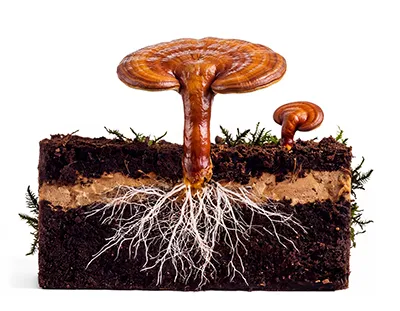
When you purchase a mushroom supplement, you are typically getting one of three things: an extract of the fruiting body (the visible “cap-and-stem” mushroom), an extract of the mycelium (the thread-like root network), or (most problematically) mycelium that has never been separated from the grain substrate it was grown on.
This distinction matters profoundly from a biochemical standpoint. Multiple peer-reviewed analyses have confirmed that fruiting bodies contain significantly higher concentrations of beta-glucans and triterpenoids than mycelium.[11], [12] A comparative study of Ganoderma lucidum found that fruiting-body extracts contained substantially greater levels of bioactive triterpenoids, the compounds most associated with reishi’s anti-inflammatory and hepatoprotective effects, with some triterpenoids essentially absent from mycelium altogether.[13]
Mycelium is not without value. Research has identified meaningful concentrations of ergosterol (a precursor to vitamin D), lovastatin (a natural cholesterol-lowering compound), and certain prebiotic fibres in mycelial preparations.[14] The problem is not just the mycelium itself; the problem is how it is being sold.
The Grain-Substrate Problem
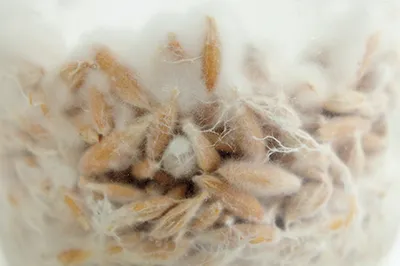
Commercial mycelium is almost universally grown on grain substrates—this is typically millet, oats, or rye—because grain provides a cheap, scalable growing medium. Once the mycelium colonizes the grain, the two become biologically inseparable. Manufacturers then dry and powder the entire mass: mycelium plus grain, together.
The resulting product is, by weight, a significant portion of starch, not mushroom. Studies analyzing commercially available mycelium-on-grain products have found beta-glucan levels dramatically lower than those found in fruiting-body extracts, with alpha-glucan content (from grain starch) making up a disproportionate share of total polysaccharides.[15] This is not a minor quibble: alpha-Glucans are dietary starches with no meaningful immunological benefit. The most important and valuable information is not the total amount of polysaccharides, but rather specifically the amount of beta-glucans.
This creates a serious problem for consumers. A label that reads “40% polysaccharides” may sound impressive, but if a substantial portion of those polysaccharides are alpha-glucans from rice starch rather than immunoactive beta-glucans from mushrooms, the therapeutic value is a fraction of what’s implied. Consumers should specifically look for products that disclose beta-glucan content, not merely total polysaccharides, verified by methods capable of differentiating fungal beta-glucans from grain-derived starches.
Why Hot-Water Extraction Is Nonnegotiable
Even a supplement made from genuine fruiting bodies may fail to deliver its benefits if it hasn’t been properly processed. The bioactive beta-glucans in mushrooms are physically bound within chitin—the tough structural polysaccharide that makes up fungal cell walls. Human digestive systems do not produce chitinase, the enzyme required to break chitin down. Raw or simply dried mushroom powder, regardless of quality, passes largely through the gut, with beta-glucans locked inside the chitin matrix and thus made unavailable for absorption.[16]
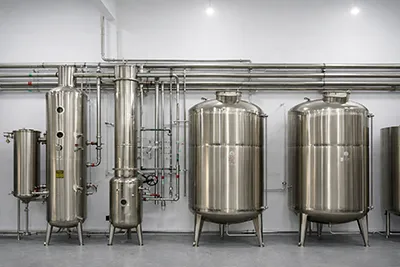
Hot-water extraction is the solution. When fruiting bodies are subjected to sustained high-temperature water extraction, the chitin matrix is disrupted and beta-glucans, polysaccharides, and other water-soluble compounds are liberated in bioavailable form. This is the method used to produce the concentrated extracts that underlie the vast majority of positive clinical research on medicinal mushrooms.
This has a direct implication for consumers: stirring raw mushroom powder into a cold smoothie, no matter how premium the source, is unlikely to provide meaningful therapeutic benefits. Hot water–extracted powders are necessary to replicate the conditions under which the science was conducted.
Making an Informed Choice
Medicinal mushrooms represent a genuinely exciting realm in nutritional science, with a body of evidence that grows more compelling each year. But in the supplement market, the gap between the best science and the worst products can be staggering. Consumers investing in these supplements should ask three questions before purchasing: Is this made from the fruiting body? Does the label specify beta-glucan content (not just polysaccharides)? Has it been hot water–extracted?
If a manufacturer cannot answer all three clearly, that silence is informative. The mushrooms themselves have earned their reputation: it’s the supplement that simply needs to deliver them.

Dr. Ludovic Brunel, ND
Dr. Brunel has 15+ years of experience as a naturopathic doctor and practices in Calgary. His approach has always been to improve health outcomes by relying on the best research available.
setonwellness.com
References
[1] P. Łysakowska, A. Sobota, and A. Wirkijowska. “Medicinal mushrooms: Their bioactive components, nutritional value and application in functional food production—A review.” Molecules 28, no. 14 (2023): 5393.
[2] S.P. Wasser. “Medicinal mushrooms as a source of antitumor and immunomodulating polysaccharides.” Applied Microbiology and Biotechnology 60, no. 3 (2002): 258–274.
[3] G.C.‑F. Chan, W.K. Chan, and D.M.‑Y. Sze. “The effects of beta-glucan on human immune and cancer cells.” Journal of Hematology & Oncology 2 (2009): 25.
[4] V. Vetvicka and J. Vetvickova. “Glucan supplementation enhances the immune response against an influenza challenge in mice.” Annals of Translational Medicine 3, no. 2 (2015): 22.
[5] D.M. Ba, P. Ssentongo, R.B. Beelman, J. Muscat, X. Gao, and J.P. Richie Jr. “Higher mushroom consumption is associated with lower risk of cancer: A systematic review and meta-analysis of observational studies.” Advances in Nutrition 12, no. 5 (2021): 1691–1704.
[6] K. Mori, S. Inatomi, K. Ouchi, Y. Azumi, and T. Tuchida. “Improving effects of the mushroom Yamabushitake (Hericium erinaceus) on mild cognitive impairment: A double-blind placebo-controlled clinical trial.” Phytotherapy Research 23, no. 3 (2009): 367–372.
[7] A.G. Contato and C.A. Conte‑Junior. “Lion’s mane mushroom (Hericium erinaceus): A neuroprotective fungus with antioxidant, anti-inflammatory, and antimicrobial potential—A narrative review.” Nutrients 17, no. 8 (2025): 1307.
[8] D. Cör Andrejč, Ž. Knez, and M. Knez Marevci. “Antioxidant, antibacterial, antitumor, antifungal, antiviral, anti-inflammatory, and nevro-protective activity of Ganoderma lucidum: An overview.” Frontiers in Pharmacology 13 (2022): 934982.
[9] Y. Wu, H. Cui, Y. Zhang, P. Yu, Y. Li, D. Wu, Y. Xue, and W. Fu. “Inonotus obliquus extract alleviates myocardial ischemia/reperfusion injury by suppressing endoplasmic reticulum stress.” Molecular Medicine Reports 23, no. 1 (2020): 77.
[10] Y. Wu, H. Cui, Y. Zhang, P. Yu, Y. Li, D. Wu, Y. Xue, and W. Fu. “Inonotus obliquus extract alleviates myocardial ischemia/reperfusion injury by suppressing endoplasmic reticulum stress.” Molecular Medicine Reports 23, no. 1 (2020): 77.
[11] R.G. Berger, S. Bordewick, N.‑K. Krahe, and F. Ersoy. “Mycelium vs. fruiting bodies of edible fungi—A comparison of metabolites.” Microorganisms 10, no. 7 (2022): 1379.
[12] M. Powell. Medicinal mushrooms: A clinical guide, 2nd Edition. Mycology Press, 2014, ISBN 978‑0‑9566898‑2‑5.
[13] S. Wachtel‑Galor and I.F.F. Benzie. “Herbal medicine: An introduction to its history, usage, regulation, current trends, and research needs.” Chapter 1 (p. 1–10) in: Herbal Medicine: Biomolecular and Clinical Aspects, 2nd Edition. Boca Raton: CRC Press, 2011, 464 p. + xxi, ISBN 978‑1‑4398‑0713‑2.
[14] C. Hobbs. Medicinal mushrooms: An exploration of tradition, healing, & culture. Summertown: Botanica Press, 1995, ISBN 1‑57067‑143‑5.
[15] S. Habtemariam. “Trametes versicolor (Synn. Coriolus versicolor) polysaccharides in cancer therapy: Targets and efficacy.” Biomedicines 8, no. 5 (2020): 135.
[16] W. Sakdasri, P. Arnutpongchai, S. Phonsavat, E. Bumrungthaichaichan, and R. Sawangkeaw. “Pressurized hot water extraction of crude polysaccharides, β‑glucan, and phenolic compounds from dried gray oyster mushroom.” LWT - Food Science and Technology 168 (2022): 113895.