Seasonal eating means eating foods around the same time they are naturally grown and harvested. In Canada, the types of foods in season will vary monthly, but you might be surprised to know that we have quite the abundance of produce available over the spring, summer, and fall months (between May and October). I encourage you to eat seasonally this summer and take advantage of all our land has to offer.
Here are five reasons why eating seasonally is good.
Nutritional and Flavour Optimization
When you eat foods in season, especially fruits and vegetables that are picked when ripe, you are eating foods at their peak nutrient quality—this means more vitamins and minerals per bite. Besides the nutrition quality being most optimal at peak ripeness, so is the flavour. How delicious is an Ontario peach in the late summer or a tomato that was grown in your garden? There is a major difference in the taste profile of fruits and vegetables when they are grown locally and picked at optimal ripeness.
Fun Fact: Frozen fruits and veggies are great. Harvested at their peak readiness and flash-frozen quickly afterwards helps to preserve their nutrient quality, making frozen produce a good choice.
Support for Local Farmers
When eating seasonally, you support local farmers, markets, and your local economy. The more seasonally we eat, the more potential we create for local farmers and more sustainable eating patterns. Eating seasonally not only supports the local economy but also saves you money. When foods are sold locally, you are not paying extensive delivery costs.
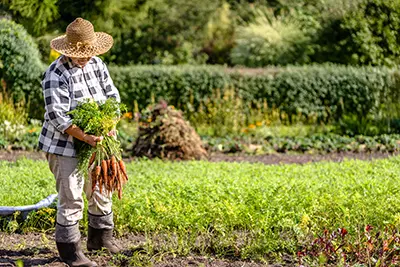 Environmental Footprint
Food often travels quite far to make it to our plate. The more we can eat seasonally, the less produce must travel to get to your plate—which reduces gas emissions. Seasonal food often requires less support from things like pesticides or other genetic modifications, as they all can naturally grow and thrive in our environment. Less use of genetic modifications and harsh pesticides leads to less environmental pollution.
Health Benefits
When eating seasonally, you are encouraged to try a wider variety of foods. This also means a wider variety of vitamins and minerals to support your overall health. Foods often contain different nutrient properties to support your body’s needs during the season of the year. For example, in the summer, a lot of “high water content” produce is in season, like watermelon and cucumber. They help hydrate the body during times of high heat.
Community Building
Eating seasonally helps you get to know your local community a little bit better. You will have the opportunity to connect with local farmers or check out local markets. You might have the opportunity to collaborate with community programs as well. For example, many towns and cities will have community supported agriculture (CSAs); this involves buying a share in the farm and enjoying the produce in return. If this is something that might interest you, I highly encourage you to give it a try.
If you are looking to eat seasonally, here are a few ways you can get started:
- Learn which fruits and vegetables are seasonal to where you live. You will find a list at right of some of the vegetables and fruits that are in season across Canada between May and October.
- Check for seasonal produce in your local grocery stores, things that are produced in your area will be labelled as produced in X province of Canada. Choose more items that are produced in Canada or in your province, city, or town.
- Consider joining a local farm share (CSA) or check out local farmers’ markets this summer, meet some new people and enjoy some nutritious and tasty fruits and vegetables.
- Try planting some of your own produce; this is a great activity for families. Research shows that children who are involved in gardening are more likely to try the fruits and vegetables they have helped grow.
- If you already enjoy eating seasonally, try some preserving techniques. Here in Canada, our best months for seasonal produce happen to be over the summer, but we can preserve things like tomatoes and berries to enjoy over the winter. Preserving involves canning, freezing, dehydrating, etc.
Canadian Summer Produce
- Greens (Swiss chard, kale, spinach, arugula, lettuce—all the greens)
- Asparagus
- Tomatoes
- Cucumbers
- Beets
- Broccoli
- Carrots
- Eggplant
- Zucchini
- Strawberries
- Blueberries
- Raspberries
- Watermelon
- Peaches
- Cantaloupe
- Cherries
- Grapes
- Rhubarb
We can enjoy seasonal produce, all while knowing we are supporting our health, local economy, and environment.
 Angela Wallace, MSc, RD
A registered dietitian with the College of Dietitians of Ontario, personal trainer, and family-food expert who specializes in women and child nutrition and fitness, she loves helping families get healthy together.
eatrightfeelright.ca


 English