You may have felt it already: the runny nose, the sore throat, that embarrassing cough. Or perhaps you’ve taken the day off work because you’ve spiked a fever, felt achy all over, and are so tired you don’t want to get out of bed. Cold and flu season is in full swing. While your local drugstore is full of conventional and natural treatment options aimed at reducing the symptoms of colds and flu, this article summarizes research that supports going back to basics in terms of nutrition and proper hygiene to help:
- Decrease your risk of catching the cold and flu this season;
- Reduce the length of time you have symptoms (which is great if you have limited sick days!); and
- Lessen the severity of your symptoms (so you can enjoy the season!).
But First, Statistics!
A family of viruses called the rhinoviruses causes about 80% of colds during peak cold season, and 30–50% of colds throughout the rest of the year.[1] That being said, there are actually around 200 other viruses that can also cause the symptoms of a common cold.[1]
The average adult has about two to three colds per year.[2] The common cold typically lasts for 7 to 10 days.[2] Throughout the year, that adds up to 14 to 21 sick days on average per adult. If you’re one of the unlucky people that have a cold last up to three weeks,[2] you could be looking at 42 to 63 sick days per year. I know what you’re thinking: That’s unacceptable! I agree. And by the way, luck doesn’t have anything to do with it. It’s all about your health, specifically the health of your immune system and how capable it is to fight off infectious causes of illness such as viruses that cause the cold and flu.
What Are the Symptoms of the Common Cold and the Flu?
The common symptoms (pun intended!) of the common cold are:
- Runny nose;[1][2]
- Nasal congestion;[1][2]
- Coughing;[1][2]
- Sore throat;[1][2]
- Sneezing;[1]
- Fever [1]—may or may not occur, and is more common in children than adults;[2]
- Fatigue;[2] and
- General discomfort and feeling unwell.[2]
A cold usually runs its course, but in some cases can lead to:
- Sinusitis;[1][2]
- Otitis media (middle-ear infection);[1][2]
- Pneumonia;[1] and
- Worsening of asthma and other chronic obstructive pulmonary diseases.[1]
 But Is it Really Just a Cold?
It can be easy to confuse the cold with the flu. Influenza virus, which causes the flu, accounts for 5 to 15% of all acute respiratory disease.[1] In general, the flu leads to more serious illness than a cold,[2] with the most common symptoms including:
- Fever;[1][2]
- Body aches;[1][2]
- Fatigue;[1][2]
- Headache;[1][2]
- Chills;[2] and
- General discomfort and feeling unwell.[2]
The elderly and people who are immunocompromised (e.g. diabetics and those on immunosuppressant medication, including organ transplant recipients) are at risk for developing more serious complications of the flu.[1]
Due to some overlap in symptoms between the cold and the flu, and understanding that you can have both the cold and the flu (and any other infection) at the same time, it makes sense to support your immune system as a whole this season.
Back to Basics: Natural Ways to Support Your Immune System
A natural approach to support your immune system starts with the basics to build a solid foundation of immunity: good hygiene and optimal nutrition. Here are three often overlooked yet important natural ways you can help reduce your risk of cold and flu infection, and help your immune system to recover as quickly as possible.
Wash Your Hands—The Right Way at the Right Time
It sounds so basic, but many of us are not doing it right. Research shows that handwashing reduces the risk of catching and spreading upper respiratory tract infections like the cold and flu.[2][3] Since research shows that the influenza virus can survive up to 30 minutes on unwashed hands,[3] this is a simple yet effective practice that you want to ensure you are doing the right way, at the right time.

The Government of Canada summarizes the most effective way to wash your hands:[4]
- Use warm, soapy water and rub hands together for at least 15 seconds (like you’ve probably heard, this is the length of time it takes to sing Happy Birthday twice!)
- Make sure to lather up under your fingernails, between your fingers, and the back of your hands.
- Rinse hands well, and dry them completely.
For best handwashing practices, remember to wash your hands:[4]
- Before and after you prepare and serve food;
- After you use the bathroom;
- After you blow your nose, cough, or sneeze into your hands; and
- After you come in from outside (e.g. from work to home, and from home to work).
Think Zinc
Zinc is a mineral that is used in hundreds of chemical reactions in our bodies.[1] Zinc levels must be adequate in order for your immune system to function properly,[6] and it is well known that zinc deficiency makes you more susceptible to infections.[5][6] Research has shown frequent dosing of zinc lozenges early on during illness significantly reduces duration and severity of the common cold in adults.[1] Zinc has also been shown to significantly reduce the number of colds per year in children.[2] Due to the known benefits of zinc to immunity, results can likely be extended to adults.[2] Good food sources of zinc include the following:[6]
- Animal protein: chicken, turkey, eggs;
- Pumpkin seeds;
- Nuts: almonds, Brazil nuts, pecans, walnuts;
- Split peas (and other peas); and
- Grains: whole wheat, oats, buckwheat.
Stock Up on Antioxidants from Veggies and Fruit
What Are Antioxidants… and Why Does My Immune System Care?
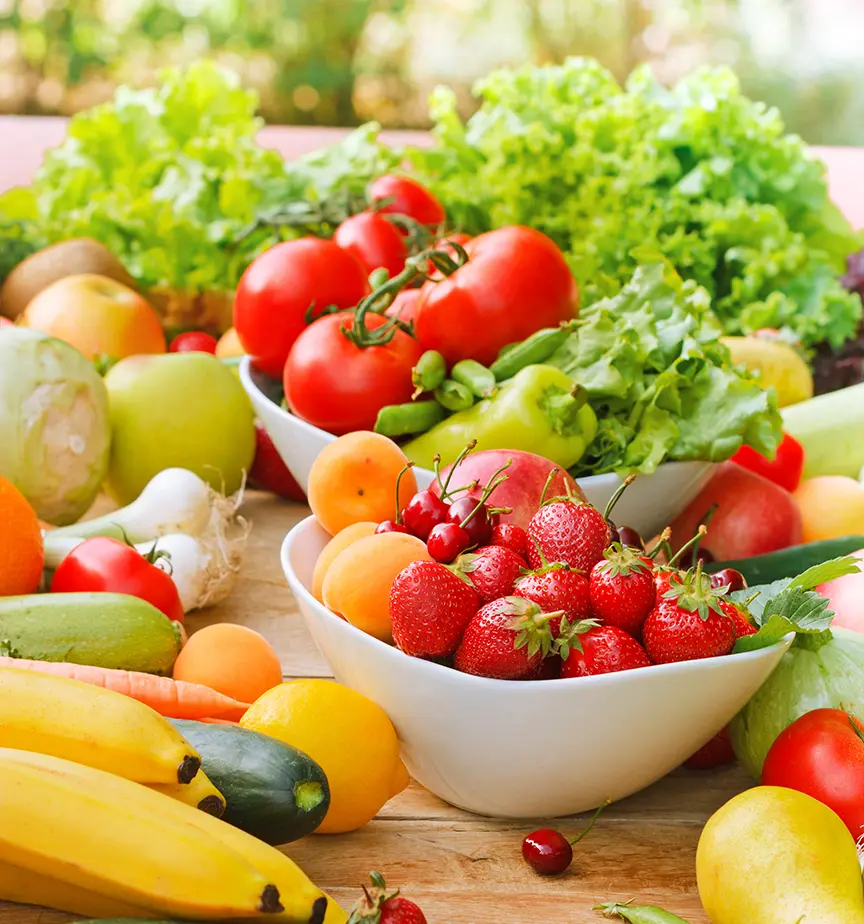
There are countless vitamins, minerals, and phytonutrients found in vegetables and fruits that can help support the immune system. My goal is to help you get more bang out of your grocery bucks by highlighting two of the most important vitamins for immunity—vitamins A and C. Nothing against the other vitamins, but these two are immune superstars because a deficiency of vitamins A and C has been shown to make one more prone to infections.[5] One of the reasons for this is that these vitamins are powerful antioxidants, which means they can protect the body from free radicals. What does that mean for immunity?
One of the first lines of defense for our immune system is making sure that the insides of our noses, mouths, and throats are healthy because they serve an important barrier between the outside world (and all of the viruses and bacteria that can linger in the air) and our bodies.[7] Free radicals are compounds that can attack these areas, causing cracks in the linings of our nose, mouth, and throats. This damage can often go unnoticed, but it gives viruses and bacteria an easy way to enter and infect our bodies. Antioxidants help to bind up these free radicals, preventing them from causing this damage to our nose, mouth, and throat, and thus reducing the chance of viruses infecting our bodies. Besides being excellent antioxidants, here’s a few more reasons to load up on foods rich in vitamins A and C this season.
Vitamin A
Vitamin A is known to activate specific immune cells and enhance antibody response,[5] both of which are important ways our immune system can kill foreign invaders like the cold and flu viruses. Vitamin A can be formed from beta-carotene and other carotenes that are rich in yellow, orange, and dark green leafy vegetables, including:[6]
- Sweet potato with skin, cooked;
- Carrots, cooked;
- Collard greens, cooked;
- Kale, cooked; and
- Butternut squash, cooked.
Vitamin C
While there is conflicting research on whether or not taking vitamin C can prevent or decrease the risk of getting the common cold,[1][2] research has shown that vitamin C can reduce the duration and severity of the common cold in both adults and children.[1] It has also been shown to enhance antibody responses as well as have antiviral and antibacterial effects.[5] Interestingly, vitamin C is depleted in times of stress,[5] so it may be especially useful in defending the body from illness during stressful periods.[1][2] Some foods that are high in vitamin C include:
- Red and green sweet peppers;
- Oranges;
- Strawberries;
- Broccoli; and
- Pineapple.
Final Thoughts
Your body has an amazing ability to fight off infections on its own, but often, due to poor dietary choices and lack of basic hand hygiene, it is at a disadvantage to do so. Do your immune system, your body, your family, and your coworkers a favour: Go back to basics, and improve your nutrition and handwashing to protect yourself and others this cold and flu season.
References
- Nahas, R., and A. Balla. “Complementary and alternative medicine for prevention and treatment of the common cold.” Canadian Family Physician. Vol. 57, No. 1 (2011): 31–36.
- Allan, G.M., and B. Arroll. “Prevention and treatment of the common cold: Making sense of the evidence.” CMAJ: Canadian Medical Association Journal. Vol. 186, No. 3 (2014): 190–199.
- Smith, S.M., et al. “Use of non-pharmaceutical interventions to reduce the transmission of influenza in adults: A systematic review.” Respirology. Vol. 20, No. 6 (2015): 896–903.
- Health Canada. The Benefits of Hand Washing. · https://www.canada.ca/en/health-canada/services/healthy-living/your-health/diseases/benefits-hand-washing.html · Updated 2014-05-30 · Accessed 2017-11-14.
- Murray, M.T. “Immune support.” In: Pizzorno, J.E., and M.T. Murray, editors. Textbook of Natural Medicine, 4th Edition. St. Louis: Churchill Livingstone, 2013, 1944 p. (here p. 516–523), ISBN 978-1-4377-2333-5.
- Murray, M., J. Pizzorno, and L. Pizzorno. The Encyclopedia of Healing Foods. New York: Atria Books, 2005, 912 p., ISBN 978-0-7434-8052-9.
- Marieb, E.N. Essentials of Human Anatomy & Physiology, 11th Edition. Boston: Pearson Education Inc., 2015, 656 p., ISBN 978-0-3219-1900-7.
 Dr. Odette Bulaong, BSc (Hons), ND
Dr. Bulaong has a passion for supporting all aspects of
women’s health, but also enjoys working with patients of
all ages and with a wide variety of health concerns. She
is a graduate of the University of Toronto as well as of
the Canadian College of Naturopathic Medicine
(CCNM).
OdetteBulaongnd.com


 English